Wird dein Baby bald 6 Monate alt, oder ist es schon 6 Monate alt? In jedem Fall möchtest du wahrscheinlich einiges über den Schlafplan für 6 Monate alte Babys wissen. Vielleicht bist du neugierig, wie oft oder wie lange dein Baby schlafen sollte. Vielleicht möchtest du auch wissen, ob es Produkte gibt, die dir helfen, dein Baby in den Schlaf zu bringen. Dann bist du bei uns genau richtig. Lies weiter, um mehr über diese und andere Themen zu erfahren.
Musterschlafplan für ein sechsmonatiges Baby
Hier ist ein Beispiel für den Schlafrhythmus eines 6 Monate alten Babys:
|
6:30 AM
|
Aufwachen
|
|
8:30 - 9:45 AM
|
1. Mittagsschlaf
|
|
12:00 PM - 13:30 PM
|
2. Mittagsschlaf
|
|
4:00 - 5:00 PM
|
3. Mittagsschlaf
|
|
6:30 PM
|
Schlafenszeit-Routine
|
|
7:00 - 8:00 PM
|
Schlafenszeit
|
Hier sind weitere Dinge, die du über den Schlafrhythmus eines sechs Monate alten Babys wissen solltest.
Welche sollte die Schlafauer eines sechs Monaten altes Babys sein?
Die ideale Anzahl an Schlafstunden für ein sechs Monate altes Baby liegt bei 10 - 14 Stunden. Dein Baby sollte in diesem Alter die Nacht durchschlafen, weil es jetzt den Tag- und Nachtzyklus erkennen kann. Es versteht, dass es in der Nacht schlafen muss. Trotzdem braucht es auch tagsüber ein Nickerchen. Jeder Mittagsschlaf sollte etwa 1 bis 2 Stunden dauern.
Warum schläft mein 6 Monate altes Baby so viel?
Babys brauchen Schlaf, um sich auszuruhen und zu wachsen. Mach dir keine Sorgen, wenn sie nachts nicht mehr aufwachen wie früher. Wie oben erwähnt, ist das normal. Bitte beachte auch, dass jedes Baby anders ist. Sei also nicht beunruhigt, wenn dein Baby mehr oder weniger als 10 - 14 Stunden schläft. Solange dein Baby so wächst, wie es sollte, und Meilensteine erreicht, brauchst du seinen Schlafrhythmus nicht zu ändern.
Schlafenszeitplan für 6 Monate alte Kinder
Dein Baby braucht vielleicht 2 bis 3 Nickerchen am Tag. Verteile diese Nickerchen so, dass dein Baby ausreichend Schlaf- und Wachzeiten bekommt, um sein Wachstum zu unterstützen. Das heißt, du kannst einen Mittagsschlaf am Morgen, einen Mittagsschlaf und einen weiteren am Nachmittag einplanen.
Hier ist ein Beispiel:
|
8:30 AM - 9:45 AM
|
1. Nickerchen
|
|
12:00 PM - 13:30 PM
|
2. Mittagsschlaf
|
|
16:00 PM - 16:30 PM
|
Der dritte und letzte Mittagsschlaf
|
Ist es normal, dass ein 6 Monate altes Baby nicht schläft?
Wenn dein Baby nachts etwa 14 Stunden schläft, dann ja. Angenommen, dein Baby bekommt nachts nicht genug Schlaf und weigert sich trotzdem, ein Nickerchen zu machen. Dann könnte es ein Problem geben. Dein Baby ist vielleicht zu dem Zeitpunkt, den du für den Mittagsschlaf vorgesehen hast, noch nicht müde. Deshalb kann es nicht einschlafen.
Wenn dein Baby zu dem Zeitpunkt übermüdet ist, kann es auch Schwierigkeiten beim Einschlafen. Ändere den Zeitplan für den Mittagsschlaf, wenn dies häufig vorkommt. Versuche auch, die Schlafumgebung zu verändern, um eine entspannende Atmosphäre zu schaffen.
Ist es normal, dass ein 6 Monate altes Baby den Mittagsschlaf verweigert?
Wenn dein Baby müde aussieht, sich aber weigert, ein Nickerchen zu machen, kann das auf ein Problem zurückzuführen sein. Vielleicht ist es hungrig und will noch nicht schlafen. Wenn das der Fall ist, nähre es zuerst. Wie bereits erwähnt, kann es auch übermüdet sein. Um das zu verhindern, musst du aufmerksamer sein. Wenn dein Baby Anzeichen von Müdigkeit zeigt, wie z.B. Gähnen, solltest du es sofort ins Bett bringen.
Wie lange sollte ein 6-Monats-Baby schlafen?
Ein 6 Monate altes Baby sollte 1 bis 2 Stunden schlafen. Aber auch hier gilt: Alle Babys sind unterschiedlich. Manche Nickerchen können länger sein, andere kürzer. Manche Babys müssen nicht einmal ein Nickerchen machen, weil sie schon genug Schlaf bekommen haben. Überprüfe einfach, ob dein Baby sich gesund entwickelt. Wenn nicht, solltest du einige Anpassungen vornehmen.
Wie viele Nickerchen sollte ein 6 Monate altes Baby machen?
Im Alter von 6 Monaten sollte ein Baby 3 Mal am Tag schlafen. Diese Nickerchen sollten jeweils etwa 1 oder 1,5 bis 2 Stunden dauern, und dazwischen sollte es 2 bis 3 Stunden wach sein. Manche Babys halten trotzdem 4 Nickerchen. Du solltest jedoch versuchen, sie auf 3 zu reduzieren, damit sie sich nicht so sehr an die kurzen Nickerchen und den kurzen Nachtschlaf gewöhnen.
Wie oft sollte ein 6-Monats-Baby schlafen?
Wie oben erwähnt, sollte das Baby dreimal am Tag ein Nickerchen machen, wenn es nachts nicht die erforderlichen Schlafstunden erreicht. Wenn sie bereits genug Schlaf bekommen, können sie auch weniger Nickerchen machen.
Schlafenszeit-Routine für ein 6 Monate altes Baby
Eine regelmäßige Schlafenszeitroutine hilft deinem Baby zu wissen, wann es Zeit zum Schlafen ist. Sie hilft ihm, schneller einzuschlafen und länger zu schlafen. Hier ist ein Beispiel für eine Schlafenszeit-Routine, die du ausprobieren kannst:
1. Zur Ruhe kommen
Dimm das Licht 1 Stunde oder 30 Minuten vor dem Schlafengehen. Du solltest auch für eine ruhige Umgebung sorgen. Das bedeutet, dass du deinen Fernseher ausschalten oder seine Lautstärke verringern solltest.
2. Warmes Bad
Gib deinem Baby ein warmes Bad. Danach wird sich die Temperatur deines Babys abkühlen. Das hilft, es zum Einschlafen zu bringen. Achte darauf, dass das Wasser warm, aber nicht zu heiß ist.
3. Kleiderwechsel
Wechsle die Windel deines Babys, damit es sich nicht unwohl fühlt. Zieh ihm dann einen bequemen Schlafanzug an. Wir empfehlen die Momcozy Schlafanzüge für Neugeborene. Diese modernen Schlafanzüge haben Etiketten, mit denen du die Temperatur deines Babys überwachen kannst. So kannst du feststellen, ob du zusätzliche Schichten anziehen musst, wenn es zu kalt oder zu warm wird.
4. Nahrungsaufnahme
Stille dein Baby oder gib ihm bei Bedarf eine Milchflasche.
5. Bring dein Baby ins Bett
Lege dein Baby in sein Bettchen und schalte das Licht aus.
6-Monate-altes Baby Wachzeit
Dein Baby sollte zwischen den Nickerchen 2 - 3 Stunden wach sein. Das ist leicht zu erreichen, wenn du die Schlafenszeiten richtig einteilst. Dein Baby kann auch bei Sonnenaufgang aufwachen, um die Nahrungsaufnahme zu machen. Nach der Nahrungsaufnahme bleibt es vielleicht noch wach, und dann beginnt der Tag. Manche Babys schlafen weiter und wachen nach ein paar Minuten wieder auf.
Warum schläft mein 6 Monate altes Baby die Nacht nicht durch?
Dein 6 Monate altes Baby könnte Schlafregression, wenn es nachts nicht durchschläft. Das ist so etwas wie ein Rückschritt in Richtung gleichmäßiger Schlaf. Das kann ein paar Tage bis zu Wochen dauern.
Warum wird mein 6 Monate altes Baby nachts mehrmals wach?
Wenn dein Baby wächst, verbessert sich seine geistige Wahrnehmung und sein Umweltbewusstsein. Deshalb kann es auch empfindlicher auf Überreizung reagieren. Mit anderen Worten: Mehr Dinge können seinen Schlaf stören. Deshalb wacht es nachts mehrmals auf, anstatt durchzuschlafen wie andere Babys im gleichen Alter.
Es könnte auch sein, dass dein Baby tagsüber mehr oder längere Nickerchen gemacht hat. Das kann sich ebenfalls darauf auswirken, wie lange es nachts schläft.
Gibt es einen Sechs-Monats-Schlafregression?
Ja, die gibt es. Die meisten Babys erleben sie nicht, aber sie ist ein häufiger Fall. Bei manchen Babys verbessern sich die Schlafgewohnheiten in diesem Alter, und bei anderen gibt es überhaupt keine Fortschritte. Das ist genauso normal wie ein Baby, das eine Schlafregression erlebt.
Aber natürlich möchtest du deinem Baby helfen, sein Schlafverhalten zu verbessern. Zum Glück gibt es verschiedene Strategien, die du anwenden kannst, um deinem Baby zu helfen, diese Herausforderung zu meistern. Dazu gehört, dass du Routinen für die Schlafenszeit festlegst und sichere Schlafrichtlinien befolgst.
Wie lange dauert die 6-Monats-Schlafregression?
Eine 6-monatige Schlafrückentwicklung kann, wie oben erwähnt, einige Tage bis Wochen dauern. Genauer gesagt, kann sie 2 bis 6 Wochen dauern. Idealerweise möchtest du, dass sie so schnell wie möglich vorbei ist, um ein gesundes Wachstum deines Babys zu gewährleisten.
Was kannst du tun, um dein Baby auf die Schlafregression vorzubereiten oder ihm zu helfen, sie zu überwinden? Oder noch besser: Wie kannst du verhindern, dass das Problem überhaupt erst auftritt? Du kannst früh und oft damit beginnen, gute Schlafgewohnheiten zu entwickeln. Eine gute Möglichkeit dazu ist, dein Baby schlafen zu legen, wenn es kurz vor dem Einschlafen ist und nicht erst, wenn es schon schläft. So lernen sie, wie sie von selbst einschlafen.
Wie man ein 6 Monate altes Baby in den Schlaf bringt
Hier sind einige effektive Schlaftrainingstechniken für 6 Monate alte Babys.
Etabliere eine konsequente Schlafenszeit-Routine
Angenommen, du entscheidest dich für das Beispiel der Einschlafroutine, das wir dir zur Verfügung gestellt haben, oder du entwickelst deine eigene. Das musst du jeden Tag tun. Wenn du es nur einmal oder ab und zu machst, wird es deinem Baby nicht leichter fallen, den Tag- und Nachtzyklus zu verstehen.
Zu guter Letzt kannst du dein Baby warm baden, seine Kleidung und seine Windel wechseln und es ein letztes Mal nähren.
Stellen Sie einen regelmäßigen Schlafrhythmus auf
Du willst die innere Uhr deines Babys regulieren, damit es die richtige Zeit zum Schlafen und Aufwachen kennt. Das kannst du erreichen, indem du einen regelmäßigen Schlafrhythmus festlegst. Zum Beispiel sollte dein Baby immer um 19 oder 20 Uhr ins Bett gehen.
Achte darauf, dass dein Baby tagsüber genug schläft, um Übermüdung zu vermeiden. Ebenso solltest du darauf achten, dass es nicht zu viele Nickerchen macht, damit es nachts länger schläft.
Schaffe eine schlaffreundliche Umgebung
Wie im Abschnitt über die Routine erwähnt, solltest du das Licht dimmen oder ausschalten. Genauso solltest du die Lautstärke des Fernsehers verringern oder ihn ausschalten. Die Stille und die Dunkelheit werden es deinem Baby erleichtern, einzuschlafen.
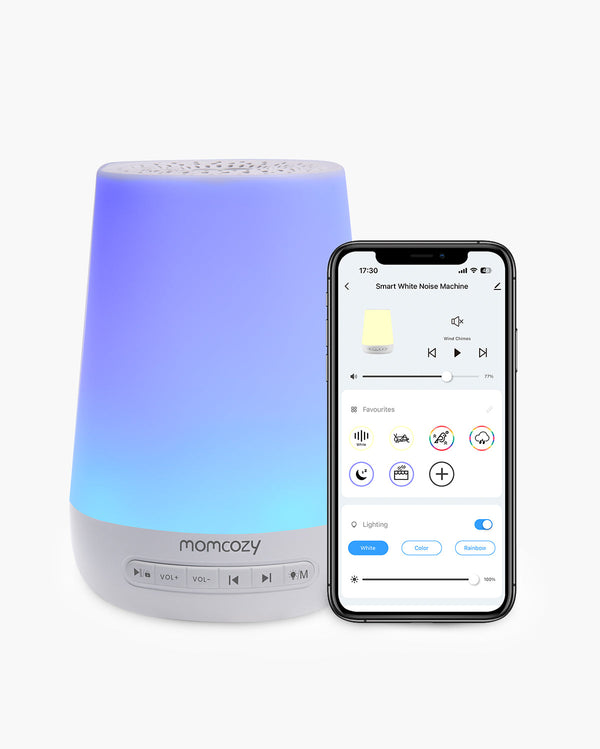
Angenommen, du hast noch etwas zu tun, dann kannst du nicht dafür sorgen, dass in deinem Haus Stille herrscht. Du kannst auch weißes Rauschen verwenden, um Haushaltsgeräusche auszublenden. Die Momcozy Geräuschmaschine ist dafür hervorragend geeignet. Sie bietet dir 34 Klänge, darunter weißes Rauschen, Naturgeräusche und Schlaflieder. Sie ist auch eine Lampe und du kannst sie mit deinem Telefon fernsteuern.
App Remote Control
Sleep-Wake Routine
7 Color LED Light
34 Sounds
Halte dein Baby
Halte dein Baby, während du es schaukelst oder stillst, um ihm beim Einschlafen zu helfen. Du kannst ihm auch ein Schlaflied vorsingen. Denk aber daran, es in sein Bettchen zu legen, bevor es wirklich eingeschlafen ist. So hat es Zeit, von alleine einzuschlafen, was für seine Entwicklung förderlich ist.
Schlussfolgerung
Gibt es einen empfohlenen Schlafrhythmus für 6 Monate alte Babys? Nein, den gibt es nicht. Es gibt jedoch einige Dinge, die man anstreben sollte. Zum Beispiel sollten sie 10 - 14 Stunden pro Tag schlafen und 2 - 3 Zeitfenster zwischen Schlaf und Nickerchen haben. Wenn dein Baby eine Schlafrückentwicklung durchmacht, solltest du versuchen, Schlafroutinen einzuführen, die ihm helfen, diese zu überwinden. Beobachte das Wachstum deines Babys und stelle fest, wie es sich auf sein Schlafverhalten auswirkt. Wenn du etwas Beunruhigendes bemerkst, solltest du deinen Arzt aufsuchen.