Eltern fragen sich oft: „Ab wann schlafen babys durch?“ Die meisten Säuglinge lernen während ihrer Entwicklung im Alter von 6 bis 9 Monaten, länger als die Nacht zu schlafen. Wie lange es dauert, bis das Ziel baby durchschlafen erreicht ist, ist von Kind zu Kind unterschiedlich, denn jedes Baby reift in seinem eigenen Tempo. Wenn du verstehst, wie sich der Schlaf auf dein Kind auswirkt, kannst du herausfinden, wann es für längere Zeit ruhen wird. Der folgende Artikel befasst sich mit dem typischen Alter für das Erreichen dieses Ziels, mit Indikatoren, die auf die Bereitschaft hinweisen, und mit nützlichen Ratschlägen, die Eltern und ihre Babys beim Erreichen der nächtlichen Ruhephase unterstützen.
Was gilt als Durchschlafen für ein Neugeborenes?
Der wichtigste Indikator dafür, dass Neugeborene die Nacht durchschlafen, ist eine ununterbrochene Schlafdauer von fünf Stunden oder mehr. Neugeborene haben einen kleinen Magen und müssen häufig genährt werden, was ihre Schlafdauer auf 2-4 Stunden reduziert. Neugeborene benötigen normalerweise Nahrungsaufnahmen und körperliche Anpassungen, nachdem sie in den ersten drei Monaten etwa drei bis vier Stunden geschlafen haben.
Wenn Babys älter werden, verbessern sich ihre nächtlichen Schlafgewohnheiten kontinuierlich. Wenn Babys drei bis sechs Monate alt sind, sind sie normalerweise in der Lage, nachts sechs bis acht Stunden am Stück zu schlafen, was ihnen den Status „durchschlafend“ für ältere Kinder einbringt.
Wann fangen Babys an, die Nacht durchzuschlafen?
In der Regel entwickeln Säuglinge zwischen ihrem 3. und 6. Lebensmonat eine nächtliche Schlaffähigkeit von bis zu 6 bis 8 Stunden. Die Bereitschaft, die ganze Nacht durchzuschlafen, entwickelt sich bei jedem Baby anders, je nach seinem individuellen Zeitplan.
Solltest du dir Sorgen machen, wenn dein Baby nachts nicht schläft?
Es besteht kein Grund zur Sorge, wenn dein Baby im Alter von unter sechs Monaten nachts nicht normal schläft. Die kurze Dauer der Schlafzyklen führt dazu, dass Säuglinge häufig zur Nahrungsaufnahme geweckt werden müssen. Säuglinge im Alter von 3 bis 6 Monaten haben in der Regel einen längeren Schlafrhythmus, müssen aber trotzdem oft während der Nachtstunden aufwachen.
Wenn dein Kind älter als sechs Monate ist und immer noch Probleme beim Einschlafen hat oder Symptome von Krankheit, Schmerzen oder Unwohlsein zeigt, solltest du dich mit deinem Kinderarzt über den Schlaf deines Babys informieren. Eine medizinische Fachkraft sollte ungewöhnliche Schlafmuster überprüfen, denn eine richtige Diagnose beseitigt alle möglichen medizinischen Bedenken.
Warum schläft dein Baby nachts nicht durch?
Es gibt verschiedene Faktoren, die dazu beitragen, dass Babys nicht die ganze Nacht durchschlafen. Wenn du die Ursachen für die Schlafstörungen kennst, können Eltern effektivere Lösungen für die Probleme ihrer Babys entwickeln. Dein Baby kann aus folgenden Gründen nachts aufwachen:
-
Hunger: Babys Mägen sind noch klein, deshalb brauchen Neugeborene, besonders in den ersten Monaten, jede Nacht viele kleine Nahrungsaufnahmen. Babys, die 6 Monate oder älter sind, müssen in der Regel nachts genährt werden, bevor sie in den Schlaf finden.
-
Wachstumsschübe: Babys neigen dazu, während ihrer Wachstumsschübe aufzuwachen, weil ihr Körper die für die Entwicklung notwendige Nahrung braucht.
-
Zahnen: Komplikationen beim Zahnen führen zu einem gestörten Schlaf, da Babys aufwachen, weil der Zahndurchbruch Schmerzen im Gesicht verursacht, die ihnen Unbehagen bereiten.
-
Entwicklungsmeilensteine: Schlafstörungen treten auf, wenn Babys Entwicklungsmeilensteine erreichen, wie z.B. das Rollen und Krabbeln sowie das Erreichen des Meilensteins Sitzen, weil diese Errungenschaften zu fortgeschrittenen geistigen Funktionen und veränderten körperlichen Entwicklungsmustern führen.
-
Trennungsangst: Kleinkinder im Alter von 6 bis 8 Monaten entwickeln typischerweise Trennungsangst, weil sie nachts häufig geweckt werden müssen, um Trost bei ihren Eltern zu suchen.
-
Krankheit oder Unbehagen: Jede körperliche Erkrankung des Babys, wie z. B. Ohrenentzündungen oder Magen-Darm-Beschwerden, kann zu vermehrten nächtlichen Störungen führen. Vergewissere dich, dass dein Kind kein Unwohlsein oder Schmerzen hat.
-
Schlafassoziationen: Babys, die einschlafen, wenn sie geschaukelt oder gehalten werden, brauchen die gleichen Bedingungen, um wieder einzuschlafen, nachdem sie ihren Schlafzyklus beendet haben.
-
Schlafumgebung: Die Schlafumgebung beeinträchtigt den Schlaf des Babys durch Lärm, Temperaturschwankungen und den Wechsel des Schlafplatzes
Was sind die nächtlichen Schlafgewohnheiten von Säuglingen?
Wenn Eltern verstehen, wie Säuglinge schlafen, können sie besser mit den Unregelmäßigkeiten der nächtlichen Ruhezeiten umgehen. Das Schlafverhalten von Babys ändert sich während des Wachstums, weil sie nachts immer länger schlafen. Ein Standardzeitplan für den nächtlichen Schlaf von Kleinkindern sieht wie folgt aus:
|
Altersgruppe
|
Gesamtschlaf pro Tag
|
Nächtlicher Schlaf
|
Schlafeigenschaften
|
|
Neugeborene (0-2 Monate)
|
14-17 Stunden
|
2-4 Stunden Abschnitte
|
Häufiges Aufwachen aufgrund von Hunger; kein geregelter Schlaf-Wach-Rhythmus; unregelmäßiger und fragmentierter Schlaf.
|
|
Säuglinge (2-6 Monate)
|
12-16 Stunden
|
Abschnitte von 4-6 Stunden
|
Schrittweise Zunahme des nächtlichen Schlafs; wacht möglicherweise noch zur Nahrungsaufnahme auf; entwickelt einen gleichmäßigeren Schlaf-Wach-Rhythmus.
|
|
Ältere Säuglinge (6-12 Monate)
|
12-14 Stunden
|
Abschnitte von 6-8 Stunden
|
Kann die Nacht durchschlafen (6-8 Stunden); längere Tiefschlafphasen; gelegentliches Aufwachen aufgrund von Zahnen, Wachstumsschüben oder Trennungsangst.
|
|
Kleinkinder (12+ Monate)
|
10-12 Stunden
|
10-12 Stunden (mit 1-2 Nickerchen tagsüber)
|
Konsistenter Schlafplan; normalerweise ununterbrochener Nachtschlaf; gelegentliche Unterbrechungen aufgrund von Albträumen oder Trennungsangst.
|
Wie du dein Baby dazu bringst, die Nacht durchzuschlafen
Der Prozess, dein Baby dazu zu bringen, die ganze Nacht durchzuschlafen, wird einfacher, wenn Eltern geeignete Techniken anwenden, die von geeigneter Ausrüstung unterstützt werden. Um ein gesundes Schlafverhalten zu entwickeln, brauchen Babys Zeit, daher helfen ihnen beständige Routinen, sich besser umzustellen. Die folgenden Tipps und nützlichen Produkte helfen deinem Baby, die ganze Nacht durchzuschlafen.
- Einrichten einer konsequenten Schlafenszeit-Routine
Der erste Schritt sollte die Einführung einer ruhigen nächtlichen Routine sein. Die Kombination eines warmen Bades mit sanften Schaukelbewegungen oder sanft gesungenen Schlafliedern lässt dein Baby erkennen, dass es Schlafenszeit ist. Beständigkeit ist der Schlüssel.
- Schaffe eine schlaffreundliche Umgebung
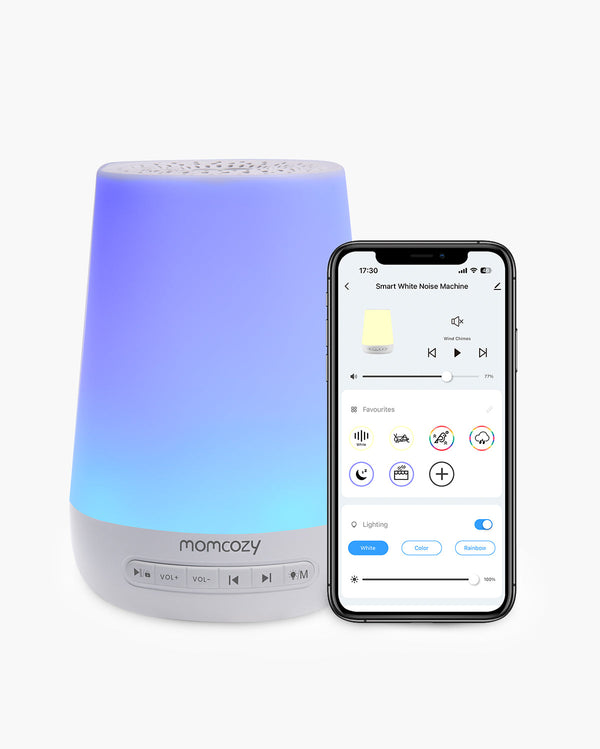
Schaffe eine schlaffreundliche Umgebung, indem du das Zimmer deines Babys so einrichtest, dass die Beleuchtung gedämpft und die Geräuschkulisse gering ist und eine angenehme Raumtemperatur herrscht. Die Momcozy Geräuschmaschine eignet sich hervorragend für Schlafräume, weil sie beruhigende Hintergrundtöne erzeugt, die dein Baby besser schlafen lassen. Diese Geräuschmaschine sorgt dafür, dass die Hintergrundgeräusche in der Umgebung minimiert werden.
App Remote Control
Sleep-Wake Routine
7 Color LED Light
34 Sounds
- Fördere den Tagesschlaf und vermeide Spätschlaf
Sorge dafür, dass dein Baby tagsüber ausreichend schläft, aber vermeide späte Nickerchen, da dies den Nachtschlaf beeinträchtigen kann. Ein Baby, das sich tagsüber richtig ausruht, schläft nachts besser. Vor dem Schlafengehen kannst du dein Baby mit einem weichen Momcozy Babypyjama warm halten. Ein weicher Schlafanzug spendet Wärme und Komfort und verhilft deinem Baby zu einer besseren Nachtruhe und einem ruhigeren Schlaf.
- Bring dein Baby schläfrig ins Bett, nicht schlafend
Damit dein Baby lernt, selbstständig einzuschlafen, legst du es in sein Bett, wenn es schläfrig wird, aber bei Bewusstsein bleibt. Mit dieser Technik lernt dein Baby, selbstständig einzuschlafen und sich selbst zu beruhigen, wenn es nachts aufwacht. Dieser Prozess braucht etwas Zeit, aber er wird deinem Baby zu einem günstigen Schlafverhalten verhelfen.
- Schlafassoziationen schrittweise reduzieren
Dein Baby braucht Zeit, um eigenständige Schlaffähigkeiten zu erlernen, wenn Schlafassoziationen wie Schaukeln, Halten oder Nahrungsaufnahme für den Schlaf unerlässlich geworden sind. Reduziere allmählich die Schlafassoziationen, damit es lernen kann, sich selbst zu beruhigen und sich in seinem Bettchen sicher zu fühlen.
- Geduldig und konsequent sein
Deine Geduld und deine Konsequenz werden dein Kind durch den Prozess des Schlaftrainings führen, auch wenn die Anpassungszeit von Baby zu Baby unterschiedlich sein kann. Konsequenz und Geduld sind der Schlüssel zu deinem Erfolg. Du solltest deinen Kinderarzt oder deine Kinderärztin nach medizinischen Ursachen für die Schlafprobleme deines Babys fragen, vor allem, wenn du anhaltende Schlafprobleme zusammen mit Anzeichen von Stress feststellst.
Wann solltest du einen Arzt aufsuchen, wenn dein Baby nachts nicht durchschläft?
Es ist typisch für Säuglinge unter sechs Monaten, dass sie nachts gelegentlich aufwachen, dennoch sollte bei anhaltenden Schlafproblemen ein Arzt konsultiert werden. Bei anhaltenden Schlafproblemen solltest du dich an deinen Kinderarzt wenden. Konsultiere nur dann einen Facharzt, wenn die folgenden Situationen eintreten:
- Übermäßiges Weinen oder Unruhe
Ein Baby, das ständig über sein normales Maß hinaus weint oder während des Schlafs übermäßig aufgeregt wirkt, kann ein Zeichen für ein tatsächliches medizinisches Problem mit Unwohlsein oder Reflux oder für andere Erkrankungen sein.
- Schwierigkeiten bei der Beruhigung oder Selbstberuhigung
Beruhigungsprobleme bei Babys, nachdem sie die Einschlaf- und Beruhigungsmethoden befolgt haben, können auf Entwicklungsverzögerungen oder sensorische Verarbeitungsprobleme hinweisen. Ein Arzt oder eine Ärztin wird feststellen, ob weitere Untersuchungen erforderlich sind.
- Ungewöhnliche Schlafmuster oder Verhaltensweisen
Es ist notwendig, deinen Arzt zu konsultieren, wenn dein Baby Veränderungen in seinen Schlafgewohnheiten zeigt oder immer wieder nach kurzen Ruhephasen (jedes Intervall beträgt weniger als 4 Stunden) aufwacht, obwohl es ein Alter erreicht hat, in dem eine längere Schlafdauer möglich sein sollte. Besuche deinen Arzt oder deine Ärztin, wenn dein Kind ein abnormales Schlafverhalten zeigt, denn das könnte auf Krankheiten wie Ohrenentzündungen, Koliken oder Allergien hinweisen.
- Schlafapnoe oder Atemprobleme
Wenn dein Baby nach dem sechsten Lebensmonat häufig nachts aufwacht, sollte es von einem Arzt untersucht werden, um mögliche Krankheiten abzuklären.
- Häufiges nächtliches Aufwachen nach 6 Monaten
- Schwierige Gewichtszunahme oder schlechte Nahrungsaufnahme
Ein Arzt sollte dein Baby untersuchen, wenn es älter als sechs Monate ist, nachts immer wieder aufwacht und nicht in der Lage ist, sich selbst zu beruhigen.
- Plötzliche Rückschritte im Schlaf
Wenn dein Baby über einen längeren Zeitraum hinweg Schlafstörungen hat, die sich nicht durch offensichtliche Gründe erklären lassen, muss es ärztlich untersucht werden. Solche Schlafprobleme können auf ernstere Entwicklungsprobleme hinweisen als typische Wachstumsmuster bei Kindern.
FAQs über Babys, die nachts durchschlafen
Wann fangen Babys an, längere Strecken und durch die ganze Nacht zu schlafen?
Babys erreichen den Meilenstein des ausgedehnten Nachtschlafs in der Regel im Alter von drei bis sechs Monaten. Babys legen mehrere kurze Schlafintervalle ein, die in der Regel zwischen 2 und 4 Stunden pro Tag dauern. Im zweiten oder dritten Monat können sie vier bis sechs Stunden ohne Unterbrechung schlafen. Zwischen dem 4. und 6. Lebensmonat erreichen die meisten Säuglinge das Stadium, in dem sie keine Nahrungsaufnahme während der nächtlichen Schlafphase benötigen. Im Durchschnitt erreichen Babys im Alter von 6 Monaten die Fähigkeit, die ganze Nacht durchzuschlafen. Das Schlafverhalten unterscheidet sich von Baby zu Baby.
Wann fangen Babys an, die Nacht ohne Nahrungsaufnahme durchzuschlafen?
Die meisten Säuglinge sind im Alter von etwa sechs Monaten in der Lage, die Nacht durchzuschlafen, ohne dass sie Nahrungsaufnahmen benötigen. Die Zeitpläne für den nächtlichen unbeaufsichtigten Schlaf unterscheiden sich von Baby zu Baby.
Ab wann träumen Babys?
Die Frage "ab wann träumen babys?" ist faszinierend. Wissenschaftler gehen davon aus, dass Babys schon sehr früh träumen, möglicherweise sogar schon im Mutterleib! Neugeborene verbringen etwa die Hälfte ihrer Schlafenszeit im REM-Schlaf (Rapid Eye Movement), der Phase, die bei Erwachsenen am stärksten mit Träumen in Verbindung gebracht wird. Obwohl wir nicht wissen, wovon sie träumen, ist diese intensive Gehirnaktivität ein wichtiger Teil ihrer Entwicklung.
Werden Babys von Natur aus nachts nicht mehr genährt?
Ja, Babys verzichten in der Regel natürlich auf nächtliche Nahrungsaufnahmen, wenn sie wachsen und ihr Körper länger ohne Nahrung auskommen kann. Im Alter von vier bis sechs Monaten fangen Babys an, nachts durchzuschlafen, weil sich ihr Schlafverhalten entwickelt und ihre Fähigkeit, nachts zu schlafen, erweitert wird. Jedes Baby erlebt die nächtliche Nahrungsaufnahme zu unterschiedlichen Zeiten während seines Wachstums.
Schlussfolgerung
Die Mehrheit der Babys kann nachts durchschlafen, und zwar 6 bis 8 Stunden zwischen 3 und 6 Monaten. Das Timing kann jedoch variieren. Der Schlafrhythmus von Babys wird durch natürliche Wachstumsschübe, das Zahnen und grundlegende Hungerbedürfnisse gestört. Eine regelmäßige Schlafroutine und eine bequeme Schlafumgebung tragen zu einem besseren Schlaf bei. Konsultiere deinen Kinderarzt oder deine Kinderärztin, wenn die Schlafprobleme deines Babys anhalten oder wenn die Anzeichen auf medizinische Probleme hinweisen.