You wake up and try to roll out of bed. Suddenly a sharp ache shoots through your lower spine. You are not alone in this struggle. Many expecting mothers find that a growing bump leads to constant physical strain. Finding effective sore back pregnancy relief is essential for staying active and comfortable.
Is Back Pain a Normal Part of Pregnancy?
Yes, back pain is very common during this journey. Statistics show that nearly 70 percent of pregnant women report discomfort in their lower back or pelvic area. Most women start feeling these aches during the second or third trimester as the baby grows. While it is a standard part of the process, you do not have to suffer in silence.
Understanding that this is a normal physical shift can help you stay calm. Your body is changing to accommodate a new life. This change puts pressure on your muscles and joints. Recognizing symptoms early can help you explore relief options that work best for your needs.
Why Your Back Hurts During Pregnancy
Several factors contribute to that heavy, aching feeling in your spine. Your center of gravity shifts forward as your uterus expands. This forces your lower back to arch more than usual. This extra curve creates tension in the muscles that support your spine.
Hormones also play a major role. Your body produces a hormone called relaxin. This hormone softens the ligaments in your pelvic area to prepare for birth. However, it also makes your joints less stable. This instability can contribute to lower back pain during pregnancy. Extra weight also adds pressure to your joints and blood vessels. This makes daily tasks feel much harder.
Use a Maternity Exercise Ball for Sore Back Pregnancy Relief
A maternity ball is one of the best tools for physical comfort. It allows you to move your pelvis while reducing pressure on your spine. The Momcozy BirthEase Maternity Exercise Ball is a great example of this type of tool. It provides a stable surface for gentle movement. Here are eight moves to help you feel better.
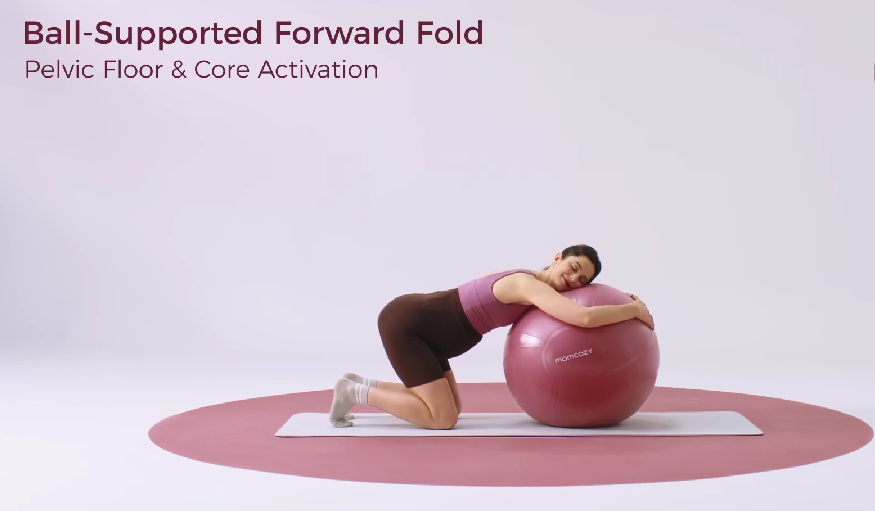
Ball-Supported Forward Fold
Get onto all fours on a soft mat. Keep your knees hip-width apart. This is about 12 inches (30.5 cm) to 15 inches (38 cm). Place the maternity ball in front of you. Wrap your arms around the ball and rest your chest on it. Let your upper body become parallel to the floor.
This position takes the weight of your torso off your lower back. It stops your muscles from overcompensating for your bump. Gently rocking the ball helps loosen the tight muscles around your spine. This is a very effective way to ease lower back pain pregnancy tension.
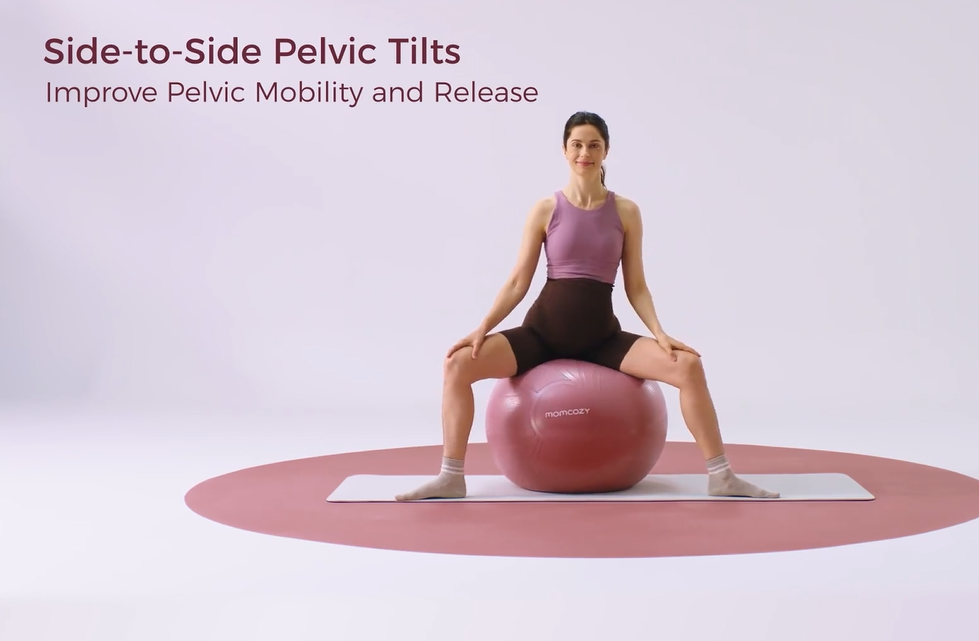
Side-to-Side Pelvic Tilts
Sit in the center of the ball. Ground your feet firmly on the floor. Keep your feet about 20 inches (50.8 cm) apart for balance. Breathe in as you prepare. As you breathe out, lower your right sitting bone. Let your pelvis shift to the right. Breathe in to return to the center. Lower your left sitting bone as you breathe out.
This move improves pelvic stability and mobility. It helps release tension in your hips and the sides of your waist. By relaxing these areas, you indirectly reduce the burden on your lower back. It feels like a gentle internal massage for your pelvis.
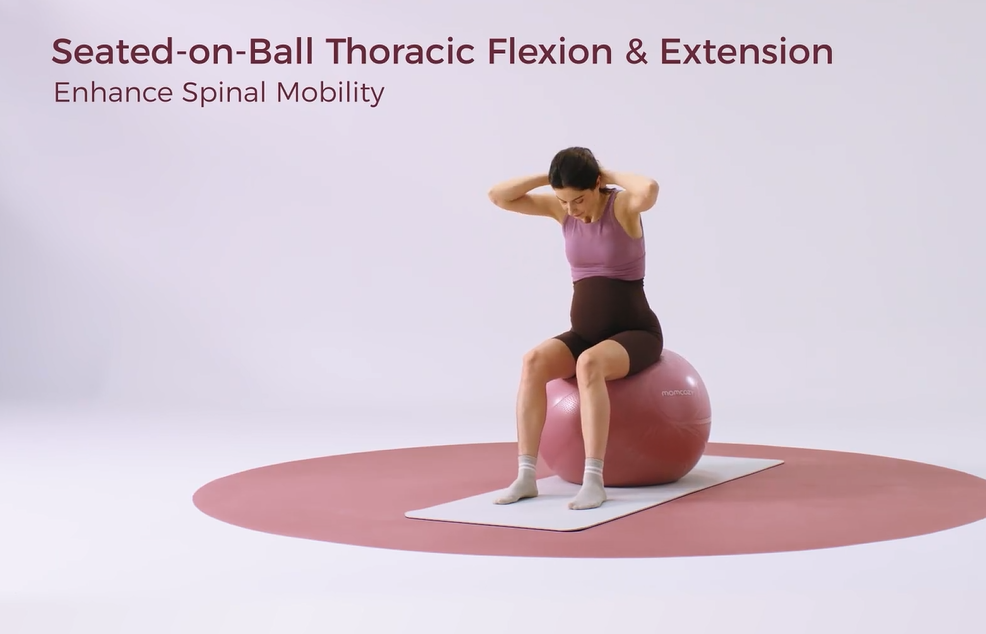
Seated Thoracic Flexion Extension
Sit on the ball with your feet hip-width apart. Cradle your head with your hands. Keep your shoulders relaxed. Breathe in and open your arms to the sides. Let your chest open like a flower. Breathe out and tilt your pelvis back. Round your spine and lower your head as your arms draw back in.
This move targets your middle back. It requires a stable pelvis which keeps your lower back supported. When your upper spine moves better, your lower spine does not have to work as hard. This creates a much lighter feeling in your whole back.
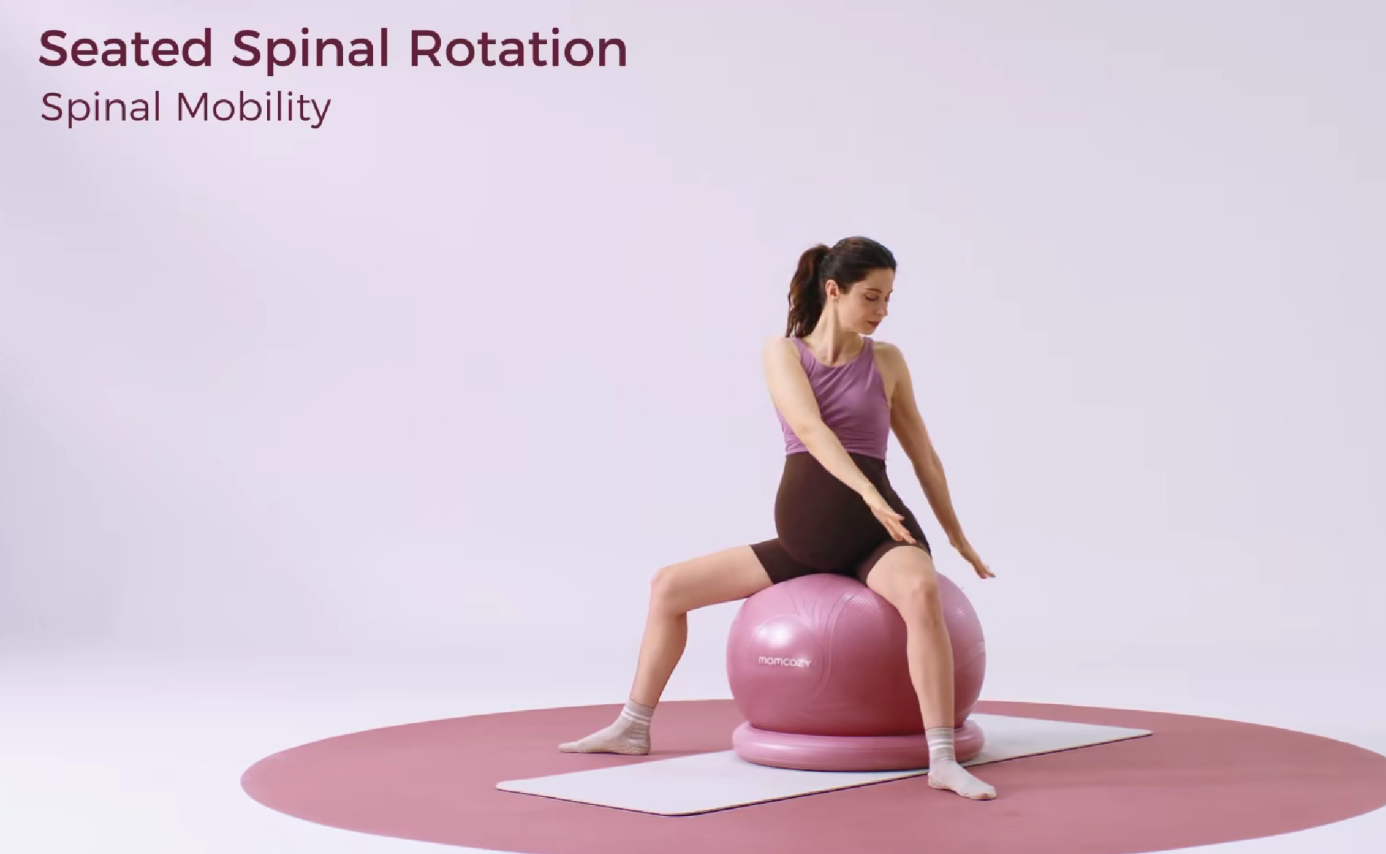
Seated Spinal Rotation
Sit evenly on top of the ball. Keep your feet slightly wider than your hips. This is roughly 24 inches (61 cm). Keep your upper body upright. Rest your hands on your knees. Gently rotate your torso to one side. Hold for a moment and then switch sides.
Gentle rotation increases the flexibility of your spine. It releases the tightness that comes from sitting or standing for too long. Maintaining this upright posture on a ball also trains your pelvic muscles. This is a key part of any pregnant back pain remedy.
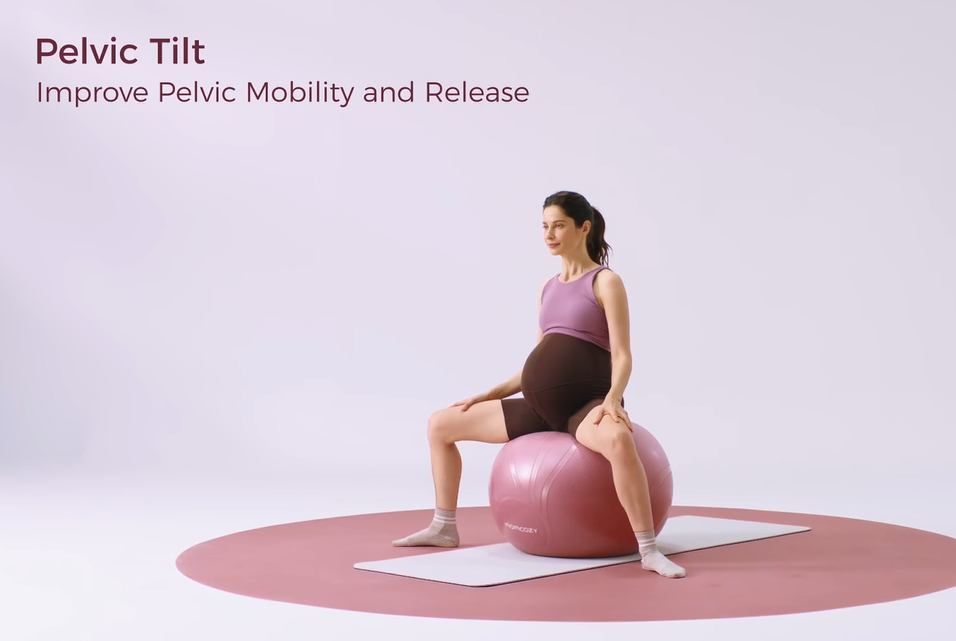
Pelvic Tilt
Sit in the center of the ball with feet flat. Breathe in and gently tilt your pelvis forward. This opens your chest. As you breathe out, draw your pelvis back. Tuck your tailbone under. Notice how your lower back feels longer and more relaxed.
This move targets pelvic control. It allows your lower spine to move without carrying any weight. It helps you "find" the length in your back again. This move is often used to help relieve lower back discomfort in the third trimester.
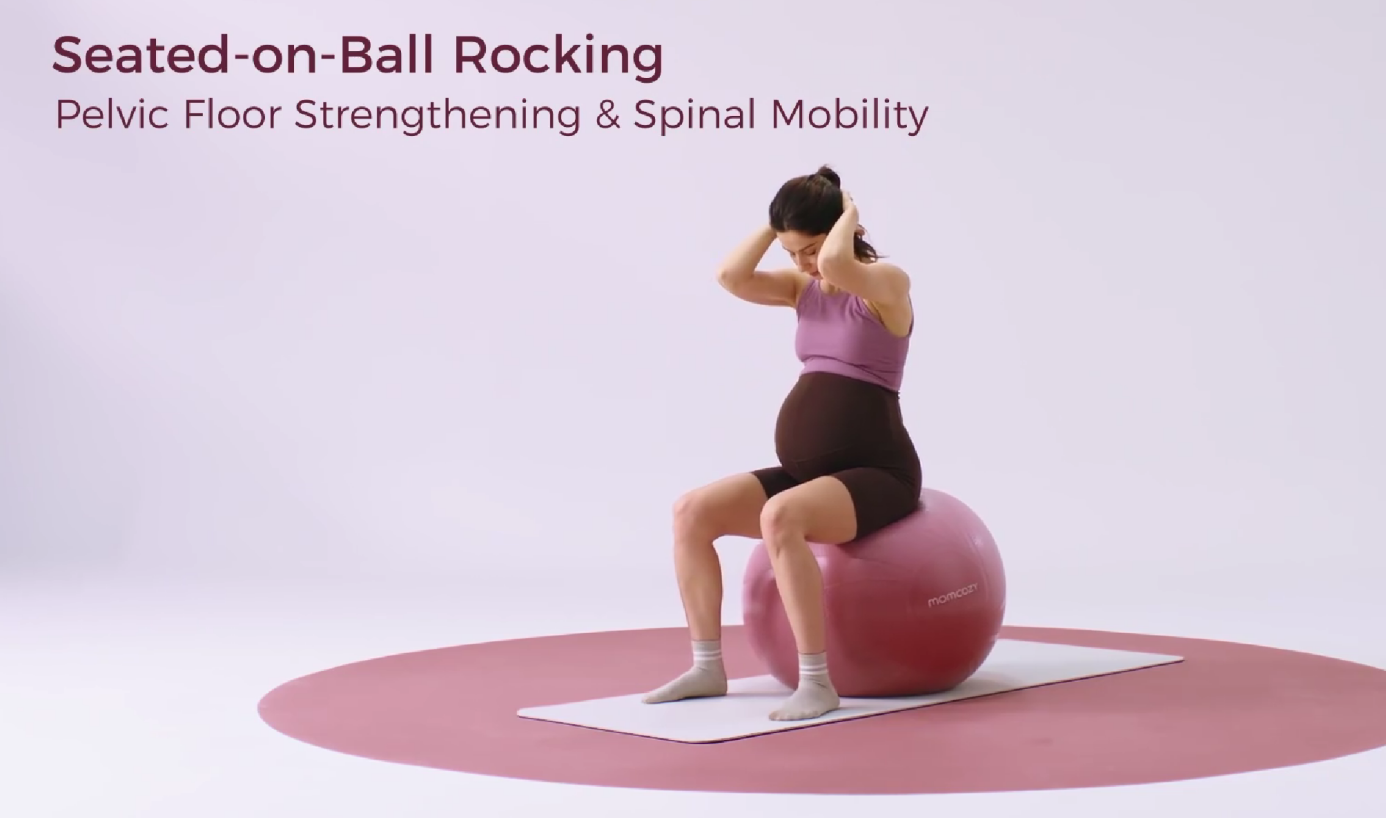
Seated-on-Ball Rocking
Sit on the center of the ball with feet wider than your shoulders. Place your hands behind your head. Breathe out and draw your lower belly in. Lift through your pelvic floor. Tuck your chin and round your back. Let the ball roll slightly forward. Breathe in and return to the start.
This move combines pelvic rolling with core engagement. It acts like a gentle massage for your sacral area. It can help reduce the discomfort that comes in late pregnancy. It helps your body feel more integrated and supported.
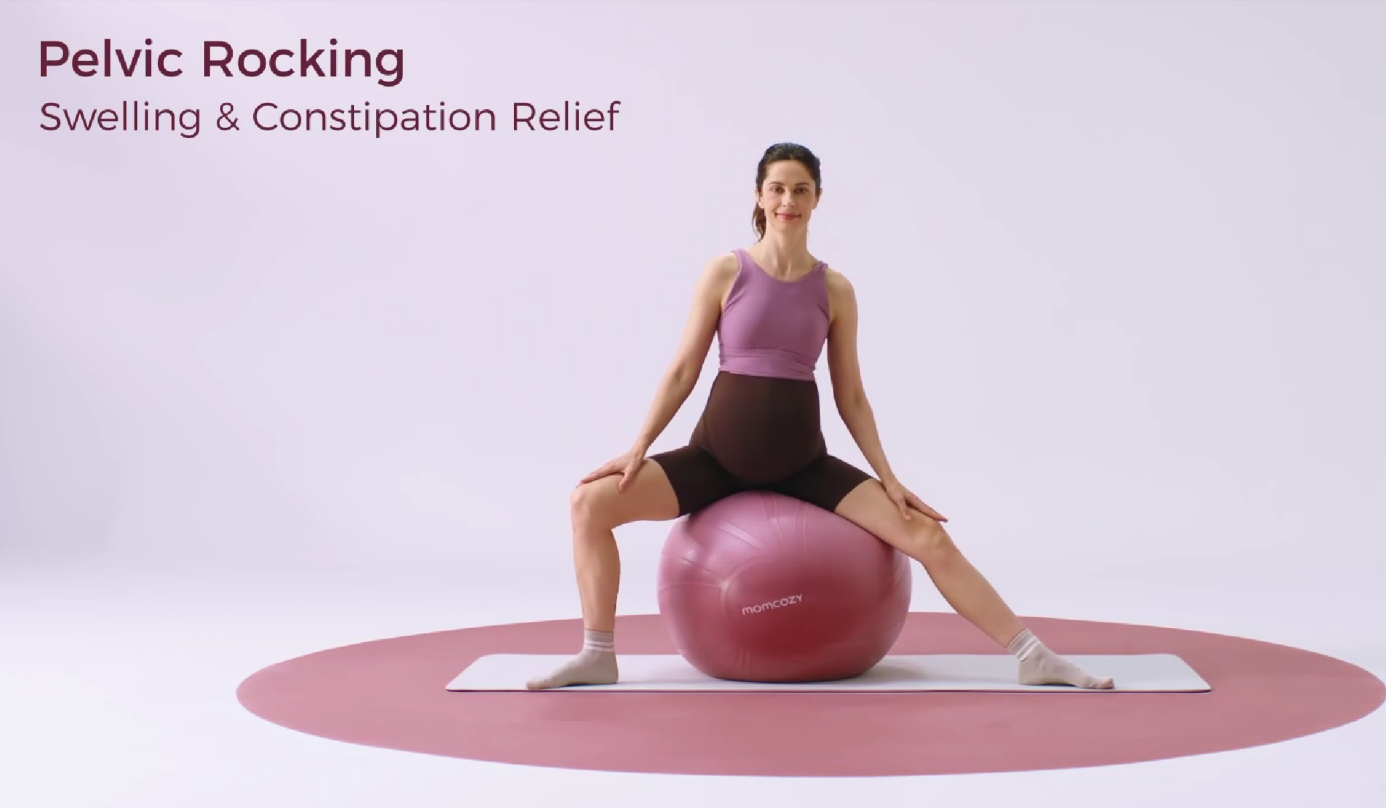
Pelvic Rocking
Sit on the ball and rest your hands on your knees. Take a deep breath. As you breathe out, lift the right side of your pelvis. Ground your right foot. Keep the right leg relaxed and let the left leg lengthen. Switch sides and sway from side to side with small movements.
Small sways improve circulation in the pelvic area. This movement reduces pressure around the lower back and hips. This exercise can help ease lower back discomfort during daily breaks.
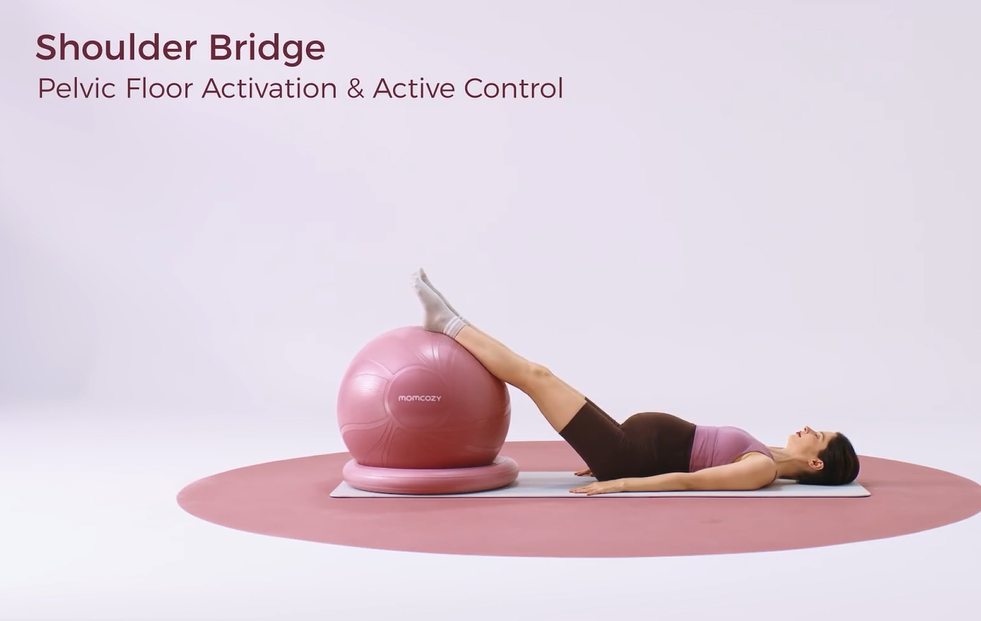
Shoulder Bridge
Lie on your back on a mat. Place your feet on the maternity ball. Keep a gentle bend in your knees. Breathe out and slowly lift your hips. Form a straight line from your shoulders to your knees. Breathe in as you lower back down.
This bridge strengthens your glutes and core. Stronger glutes take the pressure off your lower back. It helps your body rely on leg strength rather than back tension. This supports the lower back and hips during the final weeks of pregnancy.
Other Ways to Relieve Back Pain During Pregnancy
Beyond exercise, you can use other tools to manage your daily comfort. These methods work well when combined with movement.
Wear a Maternity Support Band
A support band can provide noticeable relief by lifting the weight of your belly. The Momcozy Ergonest Maternity Belly Band is designed for this purpose. It uses 3D molding to cradle your bump. This reduces the forward pull on your spine.
You can wear Momcozy pregnancy belly band like this during walks or household chores. It helps stabilize your pelvis and supports your lower back. Many moms find that it makes their bump feel much lighter. This is a simple pregnant back pain remedy for busy days.
Schmerzlinderung
Komfort
Effektivität
Apply Heat or Cold Packs
Temperature therapy is a classic way to soothe sore muscles. Use the table below to decide which one you need.
| Treatment |
When to Use It |
How it Helps |
| Heat Pack |
For dull aches and stiff muscles. |
Increases blood flow and relaxes tight tissue. |
| Cold Pack |
For sharp pain or inflammation. |
Numbs the area and reduces swelling. |
Apply your chosen pack for about 15 to 20 minutes. Always wrap the pack in a towel to protect your skin.
Improve Your Daily Posture
How you sit and stand matters. Avoid slouching when you are on the couch. Use a pillow to support the curve of your lower back. When standing, keep your weight balanced on both feet. Do not lock your knees.
When you sit at a desk, keep your hips and knees at 90-degree angles. A maternity ball can also serve as a short-term alternative to an office chair. It encourages "active sitting" which keeps your core muscles engaged. This helps keep your back from becoming stiff.
Choose Supportive Footwear
Your feet are the foundation of your posture. Avoid high heels or completely flat flip-flops. Look for shoes with good arch support. During pregnancy, your feet may grow or swell. Ensure your shoes have enough room. Comfortable shoes help align your hips and spine correctly.
How to Prevent or Ease Back Pain During Pregnancy
Prevention is often better than treatment. You can take small steps every day to protect your spine.
-
Sleep on your side: Use a pregnancy pillow to keep your hips aligned. Place the pillow between your knees.
-
Lift correctly: Always bend at your knees, not your waist. Use your leg muscles to lift objects.
-
Stay active: Walking and swimming are excellent low-impact exercises. They keep your muscles strong without straining your joints.
-
Avoid standing too long: If you must stand, rest one foot on a small stool or box. Switch feet every few minutes.
When to Call Your Doctor
Most back pain is normal, but some symptoms need professional attention. Contact your healthcare provider if you experience any of the following.
- Severe pain that does not go away with rest.
- Pain accompanied by a fever or vaginal bleeding.
- A rhythmic, cramping feeling that could be preterm labor.
- Numbness or tingling in your legs or feet.
- Difficulty urinating or sudden loss of bladder control.
Always listen to your body. If something feels wrong, it is better to get it checked out.
FAQs about Back Pain During Pregnancy
Q1: Do hormones contribute to back pain?
Yes. Your body releases relaxin to loosen your pelvic joints for birth. This makes your ligaments stretchier. This change can lead to instability and pain in the lower back and hips.
Q2: How can I lift things safely?
Always squat down by bending your knees. Keep your back straight. Hold the object close to your body as you stand up. Do not twist your torso while carrying something heavy.
Q3: Is it okay to walk during pregnancy?
Yes, walking is very safe and helpful. It improves circulation and keeps your muscles toned. Try to walk for 20 to 30 minutes a day on a flat surface. Wear supportive shoes.
Q4: What can I do for support when sitting?
Use a lumbar roll or a small pillow behind your lower back. Ensure your feet reach the floor. Avoid crossing your legs. You can also sit on a Momcozy BirthEase Maternity Exercise Ball to keep your pelvis neutral.
Q5: Is swimming a safe form of exercise?
Yes. Swimming is often the most comfortable exercise for pregnant women. The water supports your weight. This takes all the pressure off your back and joints while you move.
Take Control of Your Comfort with Momcozy
You can manage your discomfort and enjoy your pregnancy more. Finding the right sore back pregnancy relief starts with gentle movement and the right support. Whether you are using the Momcozy BirthEase Maternity Exercise Ball Set for daily routines or wearing a support band, your body will thank you. You can find these helpful tools and more on the Momcozy website to support your journey today.